
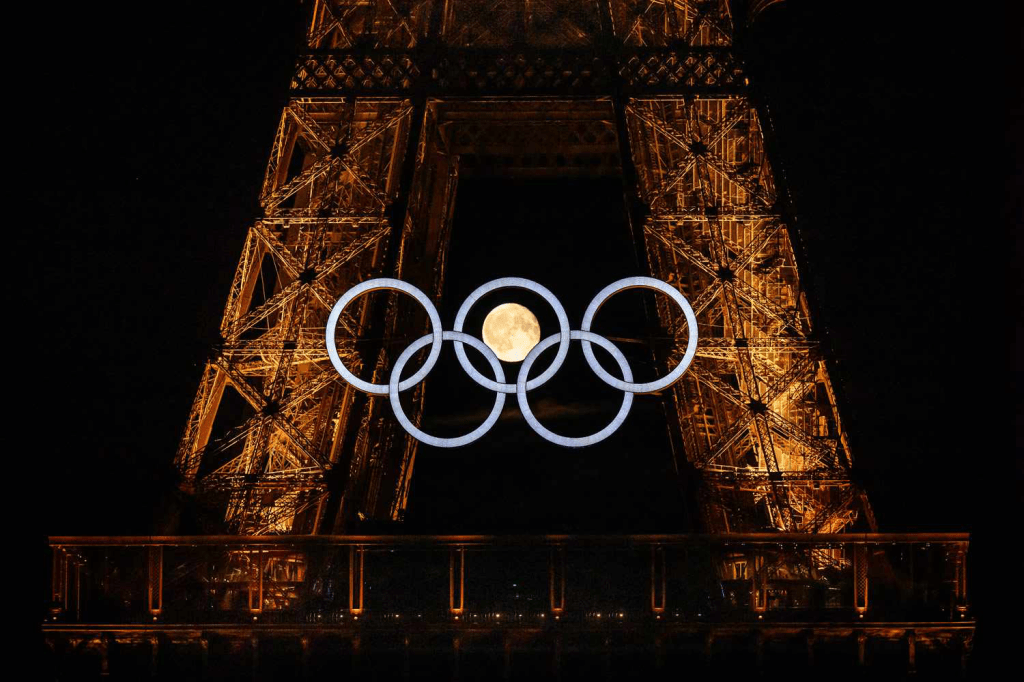
The Olympics in Paris, the city of love, come with high expectations. Yet, this year’s Olympic Games were filled with controversies from the start. [Disclaimer: I personally did not actively follow the event, as I’m more of a person who watches replay highlights on YouTube after the fact.]
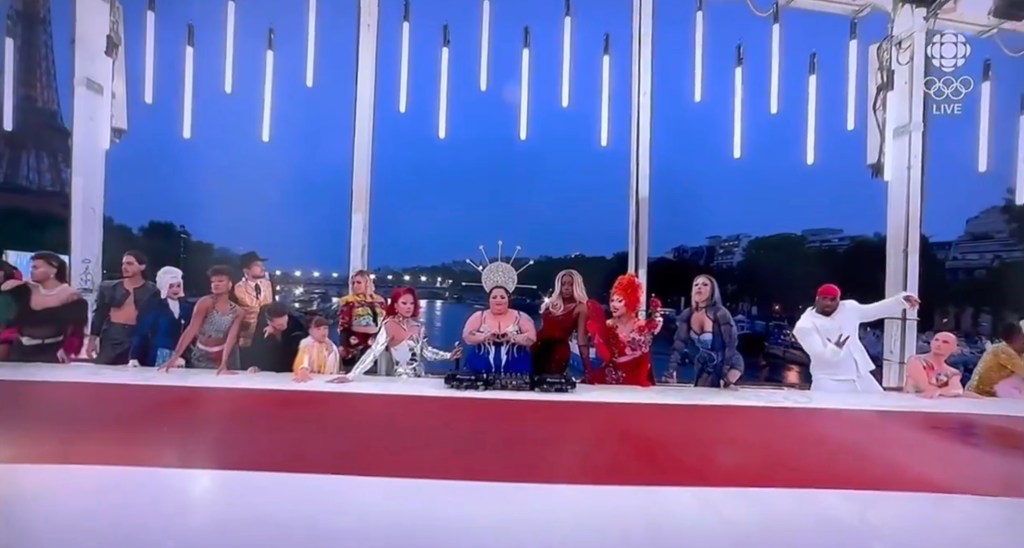
Amongst them all, as an art historian, I’ve been intrigued by one scene in the opening ceremony, which supposedly draws inspiration from one of two artworks: The Last Supper by Leonardo da Vinci or The Feast of the Godsby Jan van Bijlert. Depending on which one it references, the ceremony could be seen as sacrilegious or not.
The Last Supper (c.1495-8) by Leonardo da Vinci (1452-1519)
It would be hard not to notice the uncanny resemblance of the scene to The Last Supper. One of Leonardo da Vinci’s most famous paintings, The Last Supper depicts the scene of Jesus having dinner with his 12 apostles after announcing that one of them will betray him.
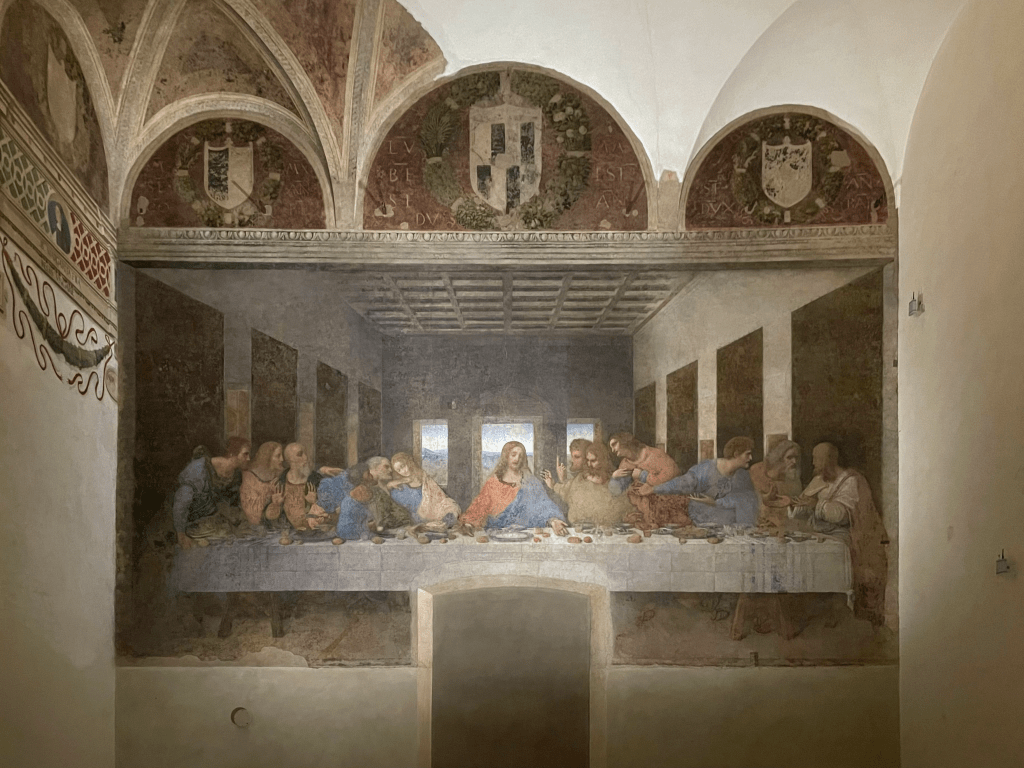
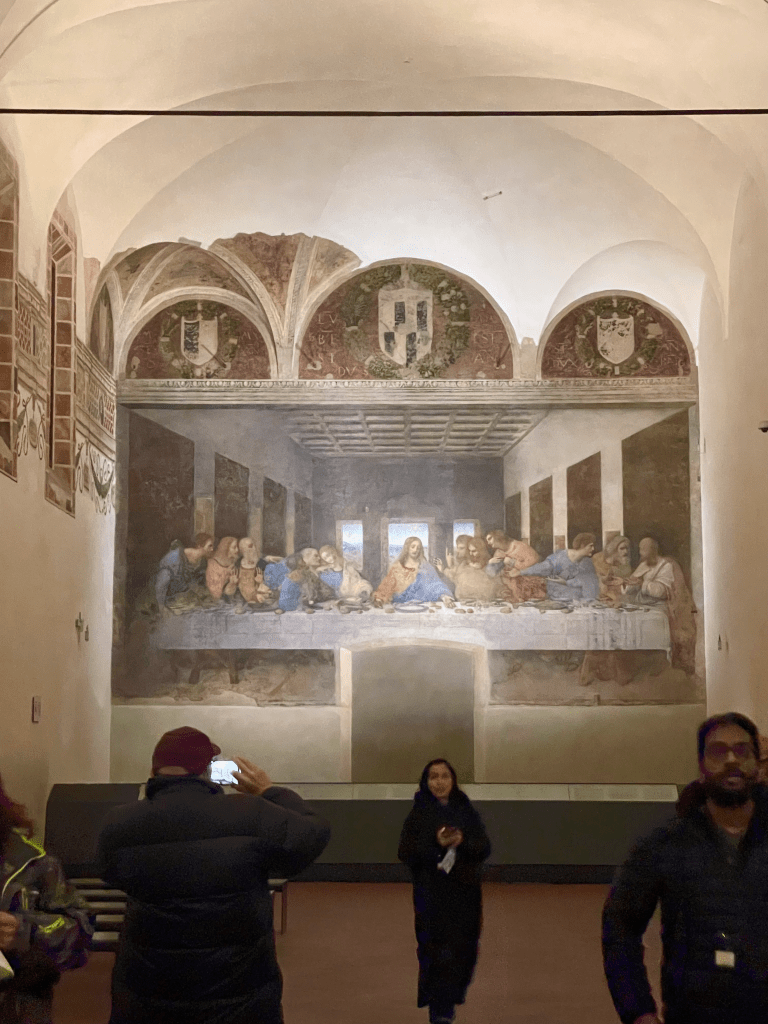
Painted around 1495-98, words cannot fully describe the elegance and transcendental beauty of The Last Supper until one sees it in person. The famous art historian Giorgio Vasari described it in his book Lives of the Most Excellent Painters, Sculptors, and Architects:
“He also painted in Milan for the friars of S. Domenic, at Saint Maria delle Grazie, a Last Supper, a thing most beautiful and marvelous. He gave to the heads of the apostles great majesty and beauty, but left that of Christ imperfect, not thinking it possible to give that celestial divinity which is required for the representation of Christ…”
Giorgio Vasari
As a true Renaissance man, Da Vinci created more than just a portrayal of a biblical scene; he incorporated elements of math, science, and architecture into the painting. The Last Supper is a mural, and Fresco was one of the classic techniques used for such works. Fresco, meaning “fresh” in italian, involves painting on wet plaster to enhance the painting’s durability as pigments would stick and dry. However, Da Vinci chose to rebel against the tradition, opting for the “secco” (dry) technique instead, where the artist paints on a dry and smooth white preparatory layer. While fresco allows artwork to last longer, it requires the artist to work quickly before the plaster dries, leaving little time for details. Da Vinci, however, preferred to work meticulously, focusing on details and making necessary changes, which led to the creation of this masterpiece. Additionally, the secco technique allowed him to intensify the tones and enhance the chiaroscuro, the contrast between light and darkness.
Despite its brilliance, the painting has endured numerous conservation efforts due to unfavorable conditions such as poor temperature control and bombing. Yet, these challenges did not prevent The Last Supper from becoming iconic. Its status as a masterpiece also means it has been the center of controversies. This isn’t the first time the painting has been associated with sacrilegious interpretations. In 2003, the novelist Dan Brown published The Da Vinci Code, which claimed that the relatively feminine-looking figure sitting on Jesus’ right is Mary Magdalene, not the disciple John the Baptist. The book was denounced by Catholic and Christian churches and criticized by many scholars for its historical and scientific inaccuracies.
One of the book’s arguments involved the composition of the painting, suggesting that a letter “M,” representing “matrimony” or “Mary Magdalene,” could be seen. However, the actual reason for this composition is likely Da Vinci’s placement of the 12 apostles in groups of three on either side of Jesus. In reality, the number three symbolizes the Holy Trinity, while the four groups represent the four Gospels. Adding three and four together gives the number seven, symbolizing completeness or the body of Christ. Da Vinci also placed Jesus in the center, with the vanishing point right next to his head, naturally drawing attention to Christ and creating depth in the painting, much like how our eyes perceive the world. Da Vinci even used a hammer and nails to perfect the perspective. Needless to say, this painting is a masterpiece in many ways, which is why it’s no wonder that many people immediately thought of it when they saw the opening ceremony.
The Feast of the Gods (c.1635-40) by Jan van Bijlert (1597-1671)
Despite the public’s assumptions, it was officially announced that Da Vinci was not the inspiration for the scene in question. Instead, the inspiration was The Feast of the Gods by Jan van Bijlert. Given Da Vinci’s reputation and The Last Supper’s prominence, this announcement likely puzzled many. Who is Jan van Bijlert, and what is this painting?
Jan van Bijlert
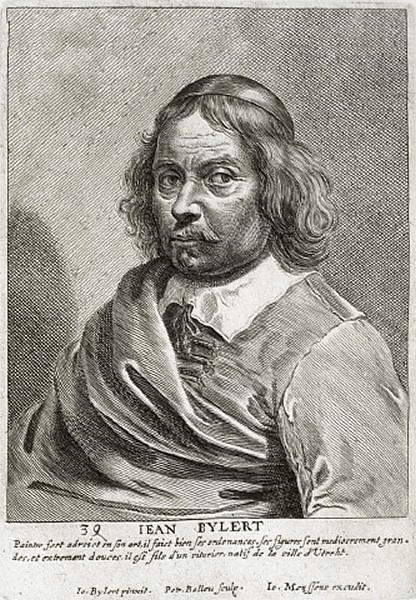
Jan van Bijlert was a Dutch Golden Age painter from Utrecht. Born to a stained glassmaker, he began his career in his father’s workshop before becoming a pupil of the Dutch painter Abraham Bloemaert. Although Bloemaert preferred naturalism, many of his students, including van Bijlert, became Caravaggisti, artists influenced by the style of the Italian painter Michelangelo Merisi da Caravaggio, the master of tenebroso/chiaroscuro, the dramatic use of light and darkness.
Van Bijlert traveled to France and Italy in the 1610s when Caravaggio’s style was widely popular. In the early 1620s, van Bijlert and fellow Dutch and Flemish artists founded the Bentvueghels, which translates to “birds of a feather” in Dutch. This group included not only painters but also engravers, goldsmiths, and sculptors. Initially, the group was informal, but over time, it began to clash with the Accademia di San Luca, which valued artists over craftsmen. The Bentvueghels’ diverse styles led to conflicts with the Accademia. Members of the group were given aliases often related to Greek mythology, and van Bijlert was nicknamed “Aeneas,” a Trojan hero and the son of the goddess Venus/Aphrodite. Van Bijlert returned to Utrecht in 1625, where he continued to produce paintings in the Caravaggesque style until 1630. Afterward, he shifted to a more classical/academic style and spent the latter part of his life helping other painters as a regent and deacon.
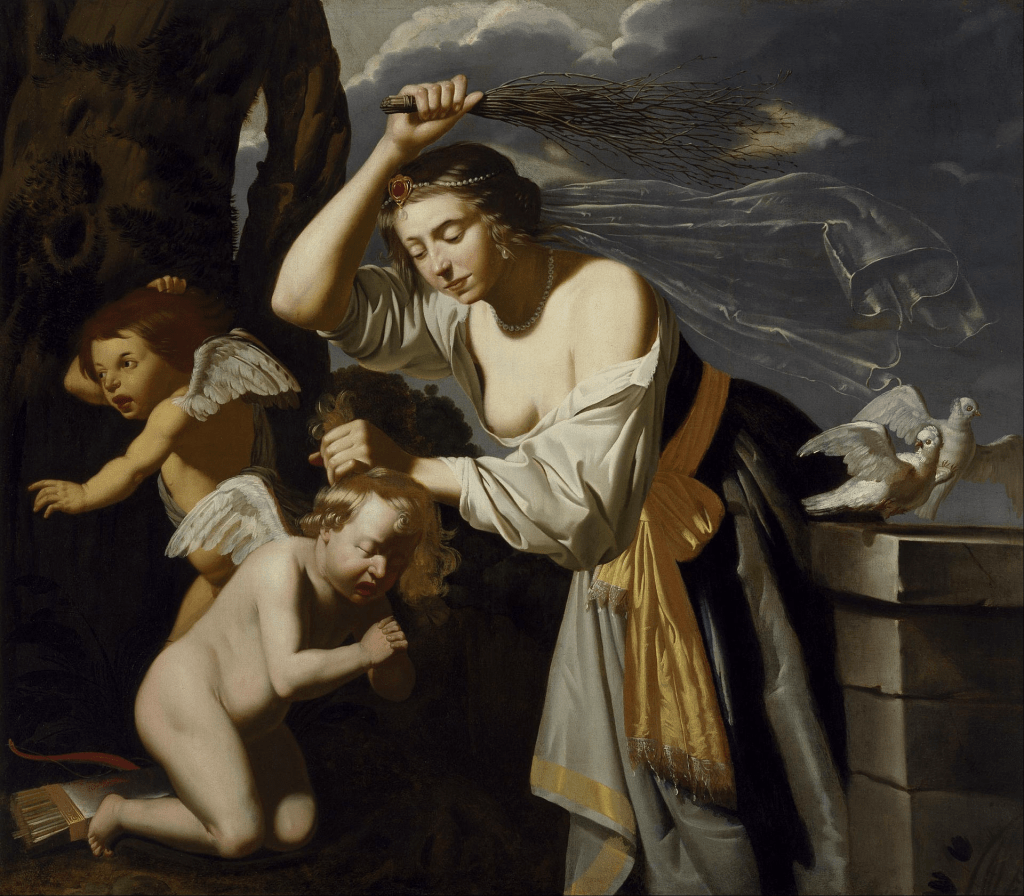
The Feast of Gods (c.1635-40)
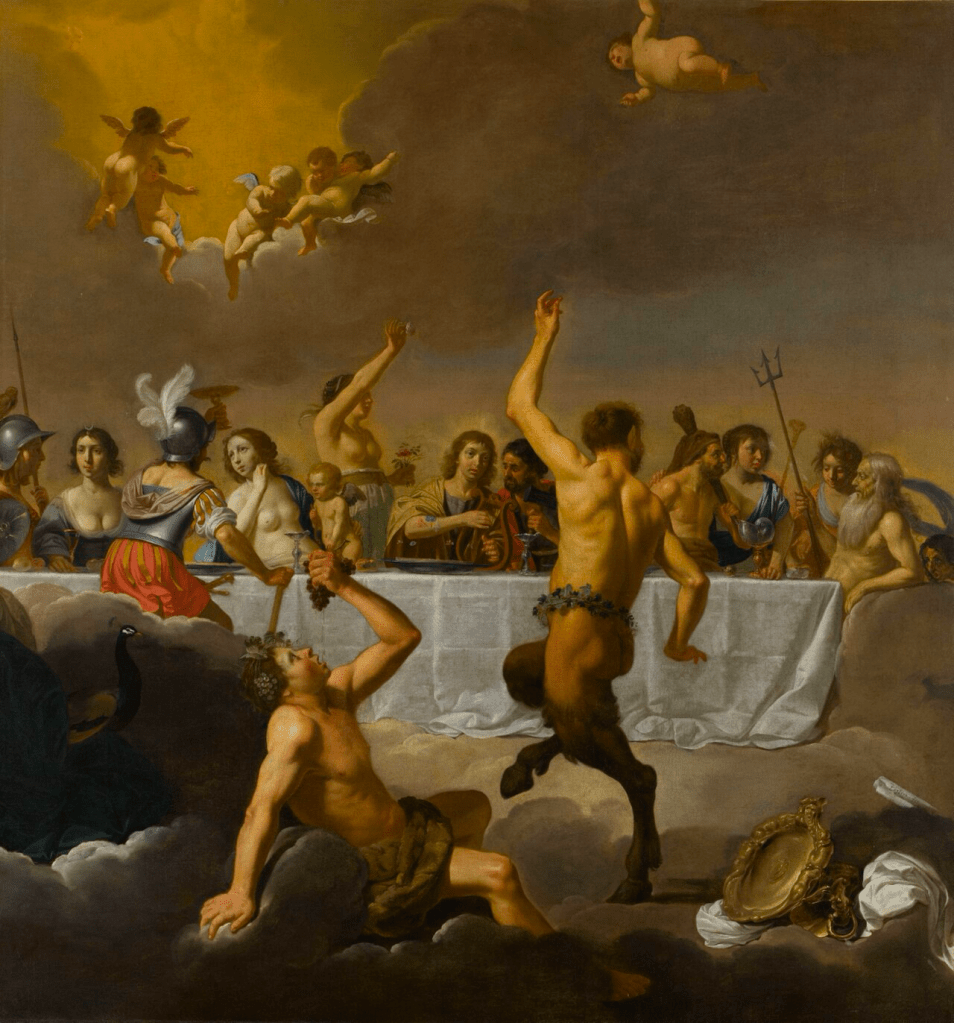
This painting, claimed to be the inspiration for the ceremony, was created after van Bijlert’s return to Utrecht. It depicts a feast celebrating the marriage of Thetis, a sea nymph, and Peleus, the king of Pithia. The couple would later give birth to Achilles, who would play a crucial role in the Trojan War. Although the painting has been cut in two, with the left side now missing, the remaining portion still allows viewers to identify various characters, as shown below.
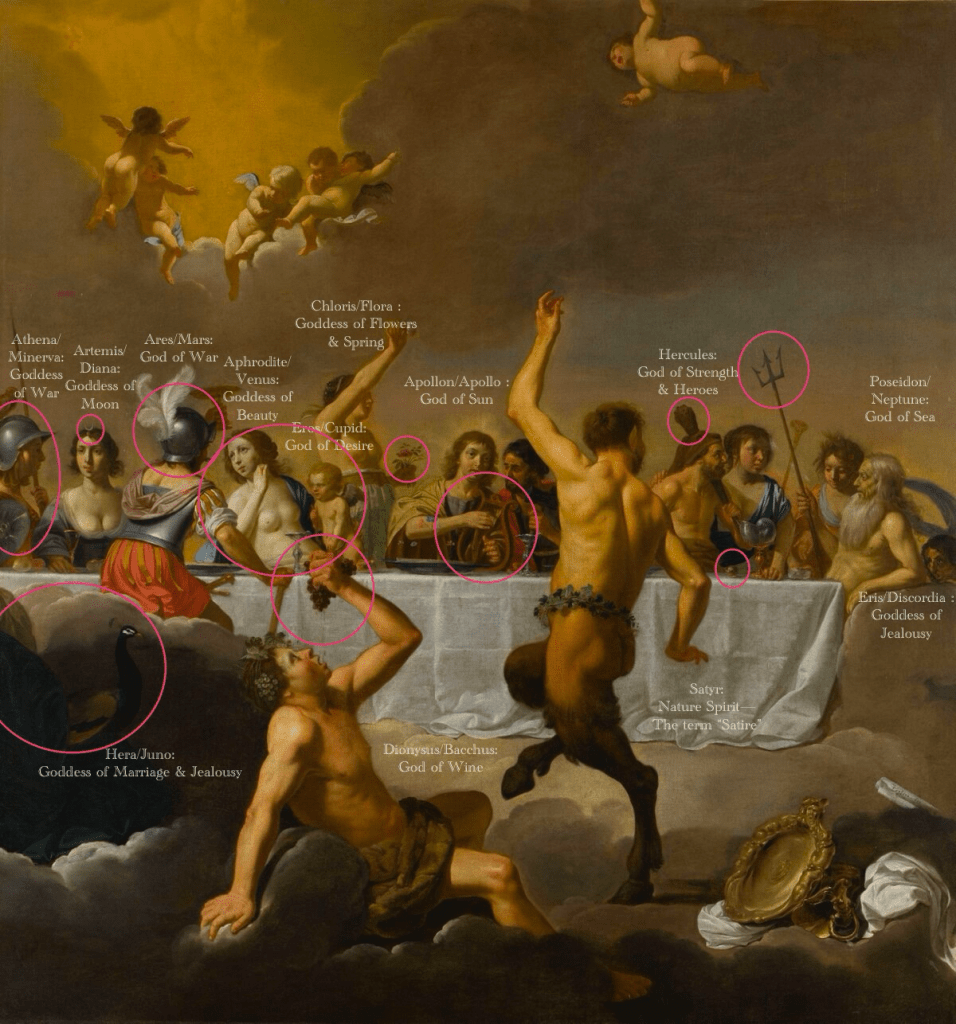
Returning to the ceremony, the Olympic committee officially announced that this painting inspired the scene and that the blue man, who was censored in some countries, represents Bacchus/Dionysus in the foreground. The main figure behind him wears a headpiece reminiscent of the sun, pointing to Apollo.
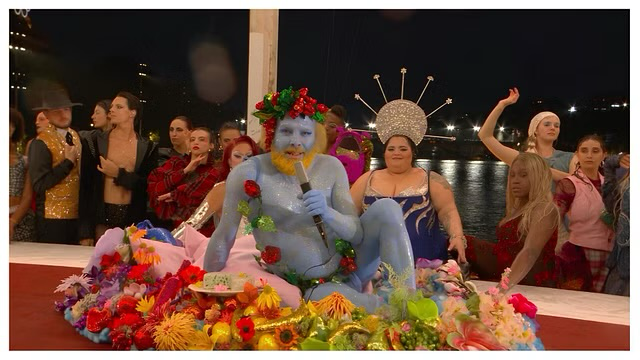
This announcement was further validated by the fact that the painting is located in the Musée Magnin in Dijon, France, having been acquired by French collector Maurice Magnin in 1938. So, it would make sense for the French government to use a work housed in the country. In sum, the official claim is that there was no intention to be sacrilegious.
Regardless of the real motive behind the ceremony, it is somewhat surprising that the committee did not anticipate the connection to Da Vinci’s The Last Supper, as it is undeniably a more recognizable painting than The Feast of the Gods by van Bijlert. Perhaps, there is an ongoing curse…
The Feast of the Gods portrays a scene that is more than just a party, as this celebration ultimately planted the seeds of war. If you examine the painting closely, you will notice a malicious-looking face peeking out on the far right. This figure is Eris/Discordia, the goddess of strife and discord, and the golden apple on the table is her doing.
Why is she peeking, and what does the apple have to do with her and the feast? It goes back to the day when Zeus received a prophecy that Thetis, a sea nymph, would give birth to a son who would surpass his father in power. Before the prophecy, many gods, including Zeus, were interested in Thetis because of her beauty. However, once the prophecy was revealed, Zeus feared that her son could threaten his position if Thetis married one of the gods. To avoid this, he decided to marry her to a human, who ended up being the King of Phthia. The feast celebrated their marriage.
All the gods enjoyed the feast except for Eris, who was not invited because Zeus did not want the wedding to be disrupted. However, Eris found out and attended the feast anyway, leaving the golden apple on the table with “to the fairest” written on it. Three goddesses claimed the apple: Hera, Aphrodite, and Athena. Desperate to avoid further conflict, Zeus delayed the decision until after the marriage. Once the wedding was over, Zeus passed the responsibility of choosing the fairest goddess to a human, Paris the Shepherd (an interesting coincidence, though the city of Paris was not named after him).
Choosing the fairest goddess was no easier for a human than for a god. Each goddess made promises to sway Paris: Hera offered lands and wealth, Athena promised victory in battles, and Aphrodite vowed to give him the most beautiful woman. Paris chose Aphrodite, and to fulfill her promise, she gave him Helen, who was already the queen of Sparta, married. This event marked the beginning of the Trojan War. Achilles, son of Thetis whose wedding started it all, was killed by an arrow to the heel, the area we now call the Achilles’ heel. Despite being mere coincidences, these elements from ancient Greece connecting to the 2024 Olympics are fascinating. Does the curse of Eris continue, bringing discord to the Olympics where it is supposed to be a stage for harmony and unity?
![[Review] Dolce & Gabbana Dal Cuore Alle Mani — Yet the Best Combining History, Art and Craftsmanship](https://thecrtd.com/wp-content/uploads/2024/08/image-2.jpeg?w=1024)


Leave a Reply